01Context
The problem wasn't the site: it was who could touch it
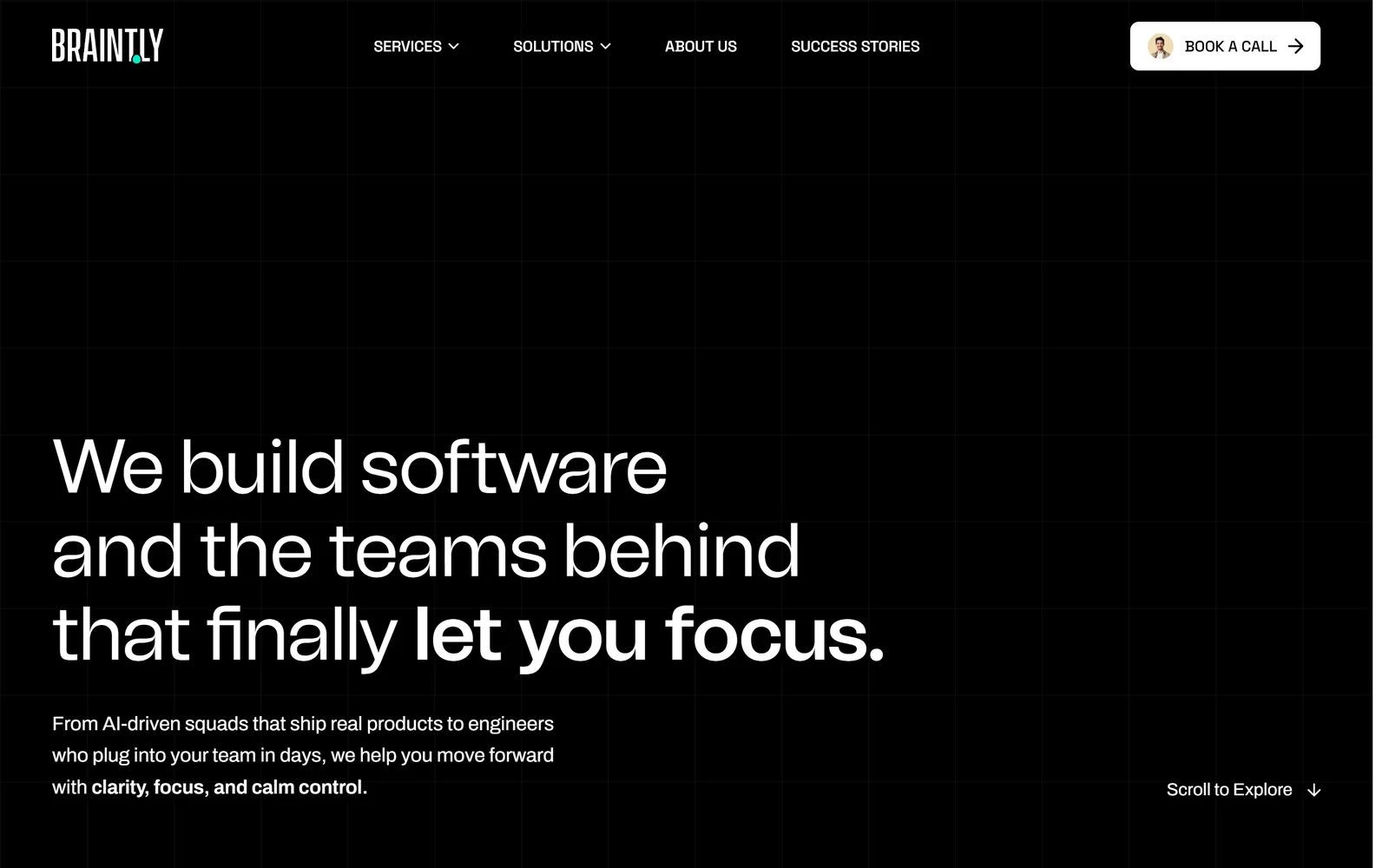
Braintly had track record and clients, but every change to their site went through a developer. That turned any commercial message update into a ticket, and the site was always out of step with what the company actually sold.
Choosing Webflow wasn't an aesthetic decision: it was choosing to let the commercial team move their own message without asking permission.
02Process
Content structure first, visuals second
Before designing screens I built the content structure: what a visitor needed to understand, in what order and at what level of detail. The new business model was the hardest piece to communicate and couldn't be buried in a secondary section.
03Decisions
Webflow over a custom build
The client wanted their own site but had no internal team to maintain it.
The client's stated goal was autonomy. A technically superior site that still left them depending on a third party wouldn't have solved the problem I was hired for.
04What I took away
- The best technical solution isn't always the best product solution. What matters is who will maintain this a year from now.