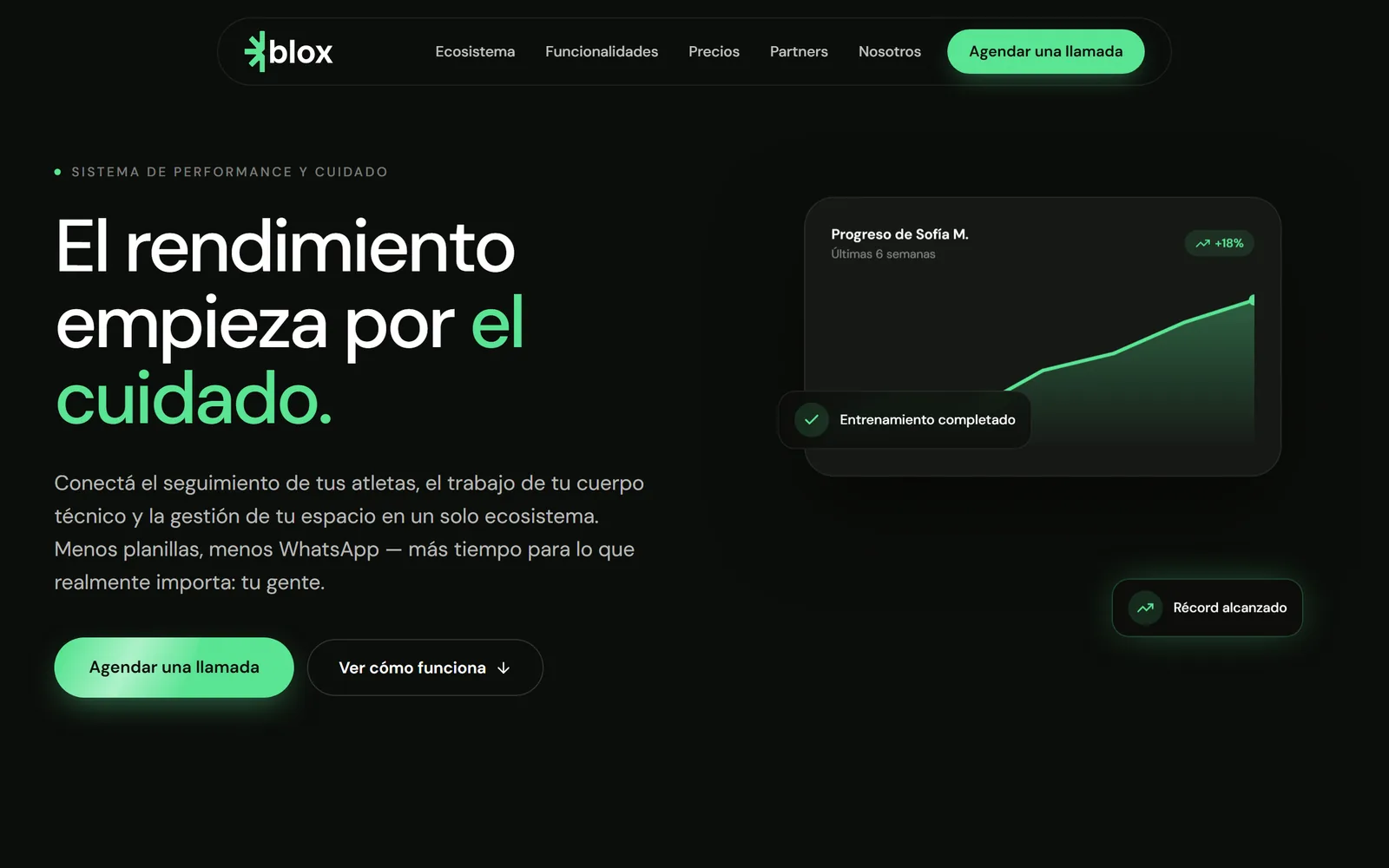
01The problem
Between 8 and 15 clients, the manual system breaks
I validated it in interviews with coaches: they don't lack clients, they lack infrastructure. Spreadsheets, WhatsApp and phone notes stop being enough.
- 01Building and sending programs takes too long.
- 02Weekly follow-up is manual and gets lost.
- 03Payments are chased over WhatsApp.
02Strategy
One segment, clear jobs and what Blox is not
I defined a beachhead —the independent coach— and broke it down into concrete jobs to be done. Just as important was deciding what not to build: if something takes more than 3 taps on a phone, it's badly designed.
- 01Create a program in under 5 minutes, from a phone.
- 02The athlete sees it without installing anything.
- 03Proactive alerts instead of finding problems too late.
03The pivot
From three products to one focus
After building in parallel for coaches, athletes and clubs, I set the focus: sports clubs, growth first. The rest went into maintenance, and the brand was rewritten around care, not control.
04Decisions
Weekly streaks, not daily
Duolingo-style gamification punishes planned rest.
A daily streak pushes people to train tired or injured. Performance with care, not cheap gamification.
Kill what doesn't work, even if it was costly
A 4-step planning wizard was already built.
Fewer steps, zero orphan drafts. Sunk cost is not a product argument.
05AI in the process
A whole product built with AI
Blox was born in v0 and grew with Claude Code: the program builder, the athlete PWA and data security were built in cycles of days, not months. I bring the product judgment; AI shortens the path to production.
- v0
- Claude Code
- Supabase
- Vercel
06What I took away
- Building with AI doesn't replace judgment: it shortens the distance between a decision and its validation.
- Focus means choosing which products to stop building.